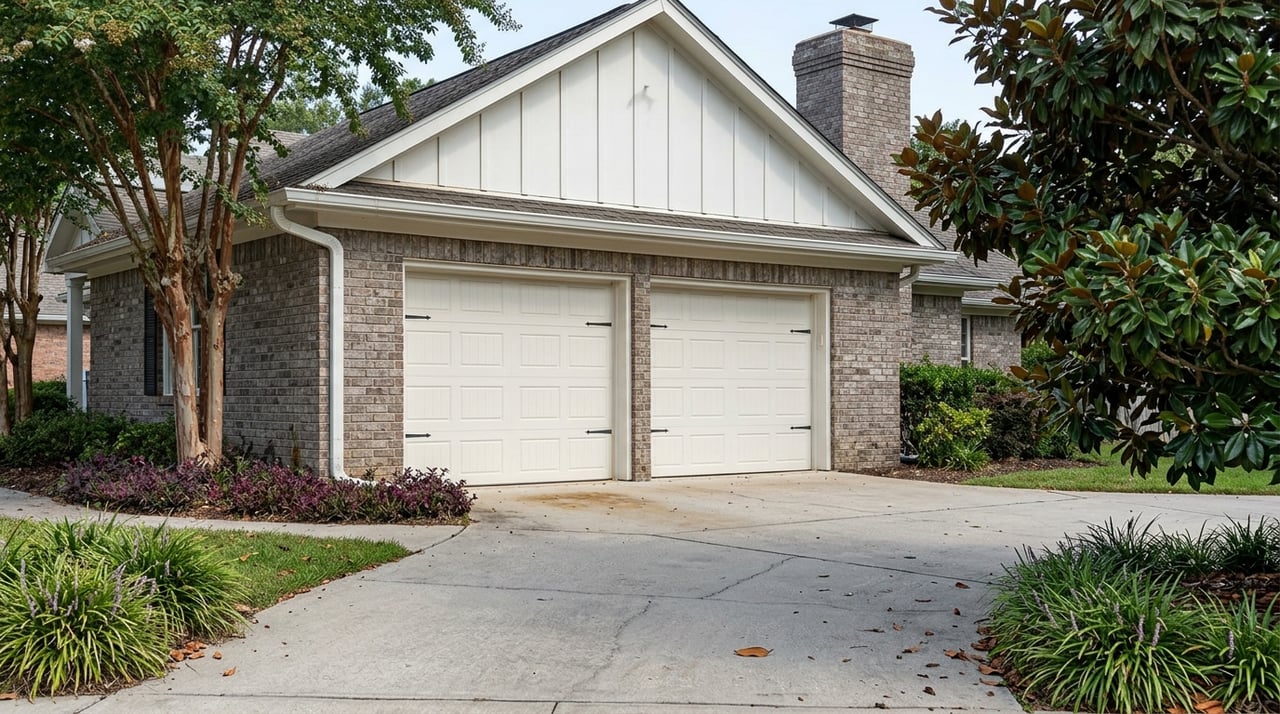
A Summerville Roof Took Five Months to Approve. Here's the Math Buyers Miss on Historic Augusta Homes.
August 27, 2026
August 27, 2026
In December 2025, a Summerville homeowner asked the city for permission to replace a roof. Nothing dramatic. No addition, no demolition, just new shingles on a house on Monte Sano Avenue. The case, filed as COA-25-72, went before Augusta's Historic Preservation Commission that month. It was still on the agenda in February, with commissioners debating whether architectural shingles were an acceptable substitute for the original tile. By May, the case had moved into mediation between the homeowner and a commission member.
Five months. For a roof.
That timeline is not a horror story about bureaucracy. It is the actual mechanism that separates the cost of owning a historic home in Augusta from the price printed on the listing sheet. If you are comparing a character-filled house in Summerville or Olde Town to a new build out in Evans or Grovetown, the sale price is the easy number to find. The harder number, the one that decides what ownership actually costs you, is how long you can wait for permission to change anything you see from the street.
Augusta has three local historic districts: Downtown, Summerville, and Olde Town. Any home inside those boundaries falls under the authority of the Historic Preservation Commission, which reviews and approves or rejects a Certificate of Appropriateness, or COA, for any project that changes the exterior appearance of the property. That covers more than you might expect. Roof replacement, additions, new construction on a vacant lot, demolition, even relocating a structure on the same parcel. The commission uses the Secretary of the Interior's Standards along with design guidelines written specifically for the Summerville district.
The application itself is an eight-page form requiring detailed photographs, drawings, and material specifications, and the city recommends applicants consult with the historic preservation planner before filing to avoid wasted time. Deadlines run on a monthly cycle: the application is due the first Monday after the previous meeting, and a sign has to be posted on the property at least 15 days before the case is heard.
None of that is unusual for a historic preservation ordinance. What is worth knowing before you write an offer is how the commission actually behaves once a case is filed. HPC Chair Barbee described the review culture plainly to The Augusta Press: the commission rarely denies an application outright. Instead, it asks applicants to withdraw and come back in 30 days. That sounds gentler than a denial, and in a sense it is, but it also means a project that looks straightforward on paper can quietly restart its clock more than once before anyone approves anything.
Barbee's framing of the commission's purpose is worth sitting with too. The districts protect structures like the house where Woodrow Wilson grew up, Ty Cobb's home on William Street, and Enterprise Mill.
"We're trying to protect the beauty that we have. We're not trying to discourage anything."
That is a genuine civic goal, and it explains why the review exists. It does not change the fact that the review adds time, and time is money for anyone financing a renovation.
Two other cases on the commission's spring 2026 agenda illustrate how wide the COA net is cast. COA-26-17 covers a proposed addition and set of improvements at a Walton Way property in Summerville, a routine-sounding project that still requires full commission review. COA-26-07, filed for a vacant lot on Arsenal Avenue in Summerville, is a request to build an entirely new single-family home on land that has no historic structure standing on it at all. That case was postponed once already, from a March meeting, before returning to the docket in May.
The lesson from both cases is the same. It does not matter whether you are touching a 1916 house or building fresh on an empty lot. If the parcel sits inside Summerville, Olde Town, or Downtown, your project answers to the same commission on the same monthly schedule, and postponements are common enough to show up routinely in the meeting minutes.
Here is where the math actually shifts, and it shifted recently enough that most buyers touring historic Augusta homes right now have never heard of it.
Georgia has long offered a state income tax credit for rehabilitating a historic property, worth 25 percent of qualified rehabilitation expenses, capped at $100,000 for a personal residence. But that credit required the property to be listed in, or eligible for, the National or Georgia Register of Historic Places, either individually or as a contributing structure within a registered district. For a buyer whose target house was locally designated but not clearly documented on the National Register, that eligibility question could be a real obstacle.
As of January 1, 2026, that changed. Georgia's Department of Community Affairs opened a new Historic Home Tax Credit Program specifically for owner-occupied primary residences that are locally designated or contributing to a local historic district, with applications accepted starting the prior October. Work could not begin until the program's January effective date, which means this is still a genuinely new lever, one that has been usable for less than a year as of this writing.
Layer that on top of the state's older Preferential Property Tax Assessment program, which freezes the county property tax assessment on a substantially rehabilitated historic home for roughly eight and a half years, and the financial picture for a Summerville or Olde Town purchase looks different than it did even eighteen months ago. The freeze requires the property to be listed in or eligible for the National or Georgia Register, which most contributing homes in Augusta's local districts already satisfy since Summerville itself has carried that federal listing since 1980.
Put the two programs together and you get a real answer to a question buyers ask constantly: does the renovation hassle in a historic district actually pay for itself? For the right property and the right scope of work, there is now more state money on the table to offset it than there was a year ago.
None of this means a historic Augusta home is automatically a better or worse buy than a new build in Evans or Grovetown. It means the comparison buyers usually run, purchase price against purchase price, is missing the two variables that determine the total cost of ownership in a local historic district: how long you can tolerate waiting on commission approval for exterior work, and whether your rehab plan is substantial enough to qualify for the credits that just expanded.
A new-construction home outside a historic district answers to standard permitting, not a design review board with a monthly meeting cycle. That is faster, and for a buyer on a tight timeline, faster has real value. A historic home carries slower approval but now carries more state-level financial support for owners who plan to renovate rather than flip. Which one wins depends entirely on what you intend to do with the house after closing, not on what it costs to buy it.
A few questions worth asking before you write an offer on a property inside Downtown, Summerville, or Olde Town:
Does a COA apply to interior renovations too? No. The review covers material changes to exterior appearance, including additions, new construction, demolition, and relocation. Interior work generally falls outside the commission's authority unless it changes something visible from the street.
Can I find out if a specific address has open or past COA cases before I make an offer? Yes. Augusta's Historic Preservation Commission publishes meeting agendas and minutes, which list case numbers, addresses, and outcomes. It is worth checking before you fall in love with a house that already has a pending mediation attached to it.
If you are weighing a historic property against a new build somewhere in the Augusta metro and want help running the actual numbers on both, Candace Riddle can walk you through what a specific address's COA history looks like, whether it qualifies for either state credit, and what that means for your timeline. Book a consultation before you write the offer, not after.
Stay up to date on the latest real estate trends.
Get assistance in determining current property value, crafting a competitive offer, writing and negotiating a contract, and much more. Contact Candace today so she can guide you through the buying and selling process.