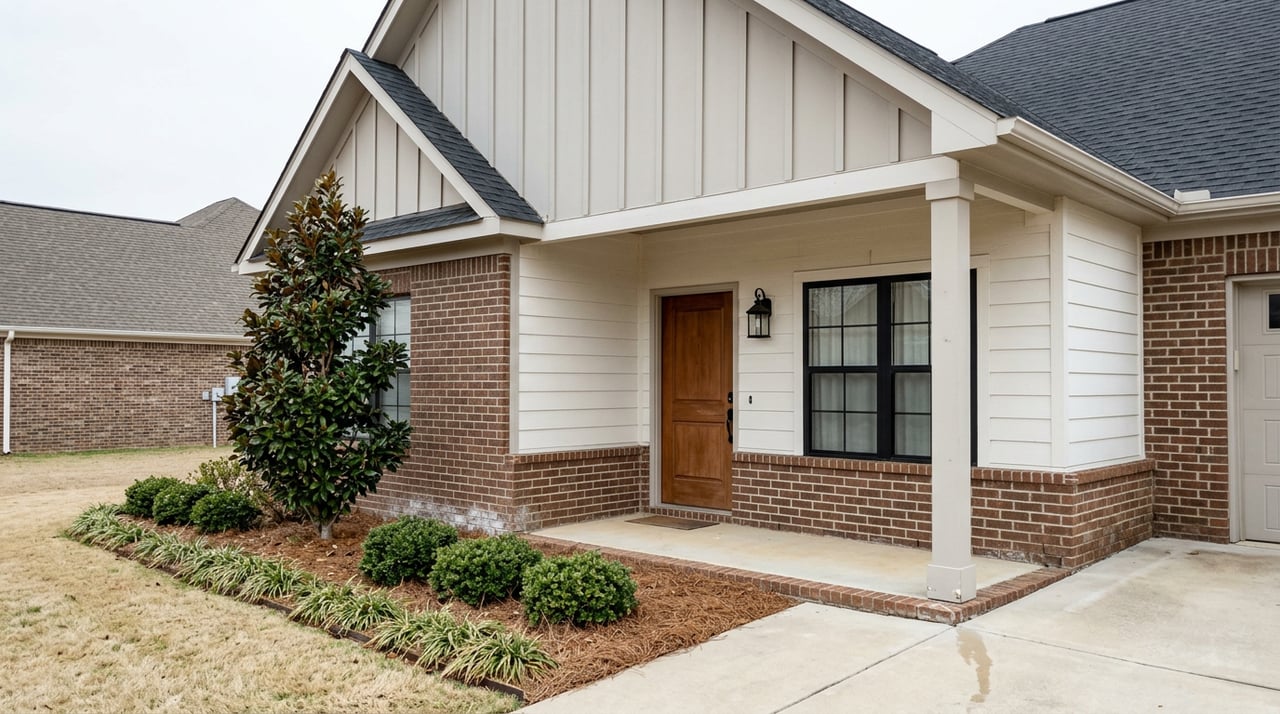
Crossing the River Changes the Paperwork, Not Just the Tax Bill
September 3, 2026
September 3, 2026
You've been house hunting in Evans and Martinez for two months. You know the drill: showing, disclosure packet in your inbox before you even ask for it, sometimes an inspection contingency built around whatever the seller already told you in writing. Then a Hammond's Ferry listing catches your eye, the kind of walkable, river-adjacent street you can't quite replicate on the Georgia side, and you write an offer. Nobody warns you that the paperwork you're about to sign runs on a different set of rules than every house you've toured so far. Not because North Augusta sellers are more honest or less honest than their Augusta counterparts. Because South Carolina and Georgia treat the seller's duty to tell you what's wrong with the house as two fundamentally different legal obligations, and almost nobody explains that difference before you're already under contract.
The property tax gap between the two sides of the Savannah River gets a lot of attention, and for good reason. But the tax bill is a number you can look up before you make an offer. The disclosure gap is procedural, and it only becomes visible once you're already deep enough into a transaction that backing out costs you something.
Georgia is what real estate attorneys call a caveat emptor state, buyer beware in plain English. There is no state law requiring a Georgia seller to fill out a standardized disclosure form. The seller's core obligation under Georgia Code Section 44-1-16 is narrower: disclose known latent defects, meaning problems a reasonably diligent inspection wouldn't catch. Beyond that, a seller has to answer your direct questions honestly. If you never ask, and the defect isn't something the statute treats as a required disclosure, the burden to find it sits with you and your inspector.
Most Georgia listing agents still use the Georgia Association of Realtors' Seller's Property Disclosure Statement as a practical matter, because it protects everyone from a future dispute. But using it is a choice, not a mandate. A Georgia seller can decline to complete one, answer your questions verbally at a showing, and still be operating entirely within the law.
Cross the river and the rulebook flips. South Carolina's Residential Property Condition Disclosure Act, codified starting at Section 27-50-10 of the state code, requires the owner of most one-to-four-unit residential properties to furnish a written disclosure statement, and the form has to be delivered before the purchase contract is signed, unless the parties agree otherwise in writing. This isn't a courtesy document a good agent recommends. It's a statutory duty that sits on the seller regardless of whether an agent is even involved in the deal.
The South Carolina form is specific about what has to be addressed, including:
If a seller knowingly puts false, incomplete, or misleading information on that form, or skips the disclosure obligation entirely, South Carolina law makes them liable for the buyer's actual damages and court costs. That's a real consequence attached to a real deadline, and it's the opposite of how Georgia handles the same moment in a transaction.
Here's the part that surprises people who assume South Carolina's rule is simply stricter across the board: it isn't absolute. The statute carves out several categories where no disclosure statement is required at all, and two of them matter a lot if you're shopping the North Augusta market specifically.
The first is new construction. South Carolina exempts the first sale of a dwelling that has never been occupied, meaning a brand-new build doesn't come with the same written disclosure obligation as a resale down the street. The second is a provision that surprises even longtime South Carolina residents: buyer and seller can simply agree, in writing, to skip the disclosure statement entirely. It's most common in as-is deals where both sides understand upfront that the buyer is accepting the property without representations about condition.
Neither of these exemptions happens by accident. They require an affirmative choice, either through the nature of the sale or a written waiver both parties sign. But if you're assuming every South Carolina listing automatically comes with a completed disclosure form in hand, that assumption can be wrong, and it's worth confirming rather than presuming.
Hammond's Ferry is exactly the kind of place where these two categories, exempt new construction and disclosure-required resale, sit side by side on the same block. The neighborhood has been building out in phases for years, and it's still adding inventory. In February, the North Augusta Planning Commission recommended approval of eleven townhouses in the Hammond's Ferry area as part of the ongoing Riverside Village development, part of the same master-planned effort that's brought the walkable town center, SRP Park, and the Greeneway trail connections that make the neighborhood feel distinct from anything comparable across the river.
That mix of active new construction and resale homes built over the past two decades means a buyer touring three houses on the same street in an afternoon could be looking at three different disclosure situations. One might be a brand-new build exempt from the statute entirely. Another might be a resale where the seller is required to hand over a completed form before any contract gets signed. A third might involve a seller who negotiated a written waiver as part of an as-is sale. None of that shows up on the listing sheet. It shows up when you ask the right question at the right time, or when your agent already knows to flag it before you write the offer.
If you're moving from Georgia-side house hunting into a South Carolina offer, the practical shift is this: you should expect a completed disclosure statement before you sign, not after, and if you don't have one in hand, that's worth a direct conversation before you commit rather than an assumption that it'll show up eventually. If you're selling a North Augusta home you've owned for years, the obligation to disclose runs to you personally, whether or not you're using an agent, and it isn't satisfied by verbal reassurance at a showing the way it might functionally work across the river.
None of this replaces a home inspection. South Carolina's law is explicit that the disclosure statement doesn't substitute for the buyer's own due diligence, and a seller only has to disclose what they actually know, not what a hidden defect might reveal under floorboards they've never pulled up. But knowing which side of the river sets which rules changes what you ask for, and when.
Does the South Carolina disclosure form replace a home inspection? No. The statute is explicit that it doesn't substitute for the buyer's independent inspection, and the seller isn't required to hire anyone to go looking for problems before filling it out.
What happens if a South Carolina seller just refuses to provide the form? The sale can still close, since failure to provide the disclosure isn't grounds to delay closing under the statute. But the seller retains liability for known defects they failed to disclose, and the buyer keeps every other legal remedy available under the law.
Is new construction in Hammond's Ferry automatically exempt? Only the first sale of a home that's never been occupied qualifies for the exemption. A resale of that same home, even a fairly new one, falls back under the standard disclosure requirement.
If I'm selling in Augusta and buying in North Augusta at the same time, do both sets of rules apply? Yes, separately. Your Augusta sale follows Georgia's caveat emptor framework, and your North Augusta purchase follows South Carolina's statutory disclosure requirement. They don't blend, and the timing on each side runs independently.
Crossing the Savannah River for your next home means crossing into a different legal framework for what you're owed in writing and when you're owed it. If you're weighing a move between the Georgia and South Carolina sides of the CSRA, Candace Riddle can walk you through exactly what paperwork to expect, on which side of the river, and at which point in the timeline it should land on your desk. Book a consultation before you write the offer, not after.
Stay up to date on the latest real estate trends.


Get assistance in determining current property value, crafting a competitive offer, writing and negotiating a contract, and much more. Contact Candace today so she can guide you through the buying and selling process.