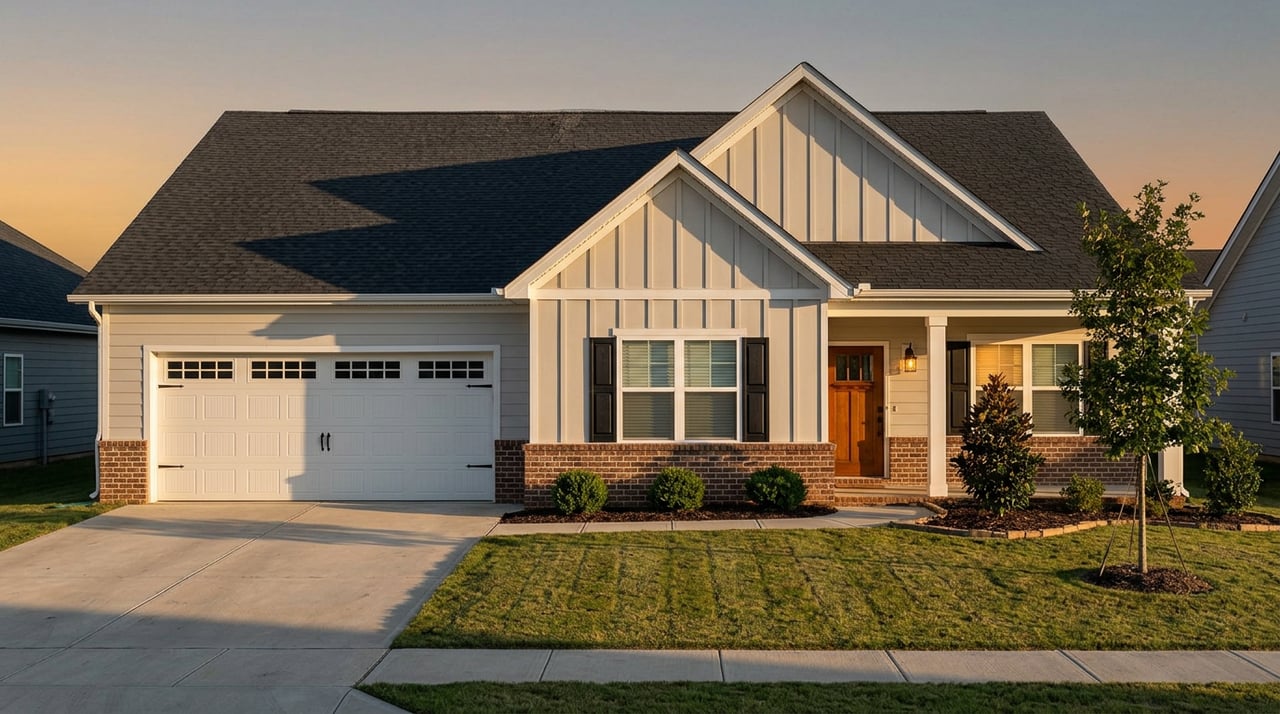
The New Georgia HOA Law Won't Cover Most Grovetown Buyers Until 2027
September 10, 2026
September 10, 2026
The HOA fee on a Grovetown listing sheet is usually a small number. Three hundred dollars a year in one subdivision, closer to $3,600 in another with more shared amenities. Buyers glance at it, decide it's manageable, and move on to the floor plan.
That number was never the risk. The risk sits in the governing documents behind it, and this year Georgia rewrote the rules those documents operate under, on two different clocks, neither of which lines up with a normal closing calendar.
Governor Brian Kemp signed Senate Bill 406, the Georgia Property Owners' Bill of Rights Act, on May 12, 2026. It is the first time Georgia has built a single statewide framework for how homeowners associations operate, replacing a patchwork where enforcement power came almost entirely from each community's own paperwork.
The mechanics matter more than the headline. Every HOA in the state now has to register annually with the Secretary of State for a $100 fee. Associations that skip registration lose the ability to collect fines, file liens, or foreclose. The foreclosure trigger itself moves from $2,000 in unpaid assessments to the lesser of $4,000 or twelve months of dues, and fines can no longer be counted toward that number, only actual unpaid assessments. The required notice before an HOA can start foreclosure proceedings doubles from 30 days to 60. The statute of limitations on an assessment lien stretches from four years to six. And for the first time, a homeowner who believes an HOA has acted improperly can file a formal complaint with the Secretary of State, which triggers an automatic stay on collection of the fines in dispute while the case is reviewed.
None of that was hypothetical before this year. Georgia news coverage around the bill's signing pointed to real disputes over fines for faded shutters and trash bins left out too long escalating toward liens and foreclosure threats, the kind of enforcement gap this law was written to close.
Here is the part that gets lost in most summaries of the law, and the part that matters most if you're shopping in Grovetown right now.
Section 7 of SB 406, covering attorney's fee itemization and judicial review, took effect July 1, 2026. That provision is already live. If an HOA tries to pass attorney fees to a homeowner today, it has to send certified notice, give 30 days to pay, and provide an itemized breakdown, and a judge has to sign off on whether those fees are reasonable.
Everything else, the registration requirement, the new $4,000 foreclosure threshold, the 60-day notice, the six-year lien window, the Secretary of State complaint process, does not take effect until January 1, 2027.
That means a buyer closing on a Grovetown home this September, October, or November is closing into a four-month gap. The attorney fee protection applies. The rest of the law does not. Your HOA is still operating under the old $2,000 threshold and the old 30-day notice period, because the calendar hasn't reached January yet.
Nothing in SB 406 rewrites a subdivision's existing covenants automatically. If a community's governing documents currently reference the $2,000 foreclosure figure, that language stays in the document until the association's board and homeowners go through the process of amending it, which typically requires a vote. Some boards will move on this quickly once the law takes effect. Others, especially smaller or newer associations still finding their footing, may take longer, or may decline to register at all.
An HOA that skips registration doesn't disappear. It keeps its covenants and its architectural review process. What it loses is the legal authority to fine, lien, or foreclose. For a buyer, that's a detail worth asking about directly rather than assuming.
Georgia has roughly 11,200 community associations statewide, with about 310 added in just the past two years, and that growth is concentrated in fast-expanding secondary metro suburbs, Augusta included. Grovetown is one of the more visible examples of that pattern locally.
Walk through the city's active new-construction inventory and the HOA is rarely optional. Anderson Farms, a 150-plus acre community off Louisville Road with 67 homesites established in 2021, runs its own HOA. D.R. Horton's Captain's Corner community, and townhome developments like Rivercrest just over a mile from Fort Gordon's Gate 6, all carry mandatory dues, ranging from around $300 a year in some subdivisions to over $3,600 a year in others.
None of that is unusual for new construction anywhere in metro Georgia. What makes it relevant here is the concentration. Nearly every builder community in Grovetown right now comes with an association, which means nearly every new-construction buyer in the city is also a homeowner walking into a law that is mid-transition.
| Provision | Before SB 406 | After January 1, 2027 |
|---|---|---|
| Foreclosure trigger | $2,000 in unpaid assessments | Lesser of $4,000 or 12 months of dues (fines excluded) |
| Pre-foreclosure notice | 30 days | 60 days |
| Lien statute of limitations | 4 years | 6 years |
| State complaint channel | None | Secretary of State hearing process |
| Attorney fee itemization | Not required | Required as of July 1, 2026 |
A buyer under contract in a Grovetown HOA community this fall has a short, specific list worth working through before closing, not after:
None of this is a reason to avoid Grovetown's new-construction market. It's a reason to read the HOA packet with the same attention you'd give the inspection report.
There's a second calendar worth watching if a builder incentive is part of the appeal. D.R. Horton's Main Street Stars program at Captain's Corner requires a signed contract between January 1 and December 31, 2026, with closing by January 31, 2027. A buyer chasing that incentive is very likely closing inside the exact window this piece describes, before most of SB 406 activates, which makes the due diligence above more urgent, not less.
Does this only affect new construction, or resale homes too? SB 406 applies to any Georgia property owners association, not just builder communities. A resale home in an older Grovetown subdivision with an HOA is covered the same way.
Will my dues go up because of this law? The law doesn't set or cap dues amounts. It changes enforcement rules around collection, foreclosure, and complaints, not the fee itself.
What happens if my HOA never registers? It loses the ability to fine, lien, or foreclose under state law, but the underlying covenants and architectural rules likely still apply. Confirming a specific community's plans directly with its board is the only reliable way to know where things stand.
If you're weighing a specific Grovetown community, whether it's a resale in an established neighborhood or a builder incentive with a hard deadline attached, the HOA packet deserves the same scrutiny as the price. Candace Riddle has been reading these documents in this market long enough to know which questions actually matter. Book a consultation before you sign anything.
Stay up to date on the latest real estate trends.

Get assistance in determining current property value, crafting a competitive offer, writing and negotiating a contract, and much more. Contact Candace today so she can guide you through the buying and selling process.