Summerville Home Prices and a $53,000 Siding Quote
September 24, 2026
September 24, 2026
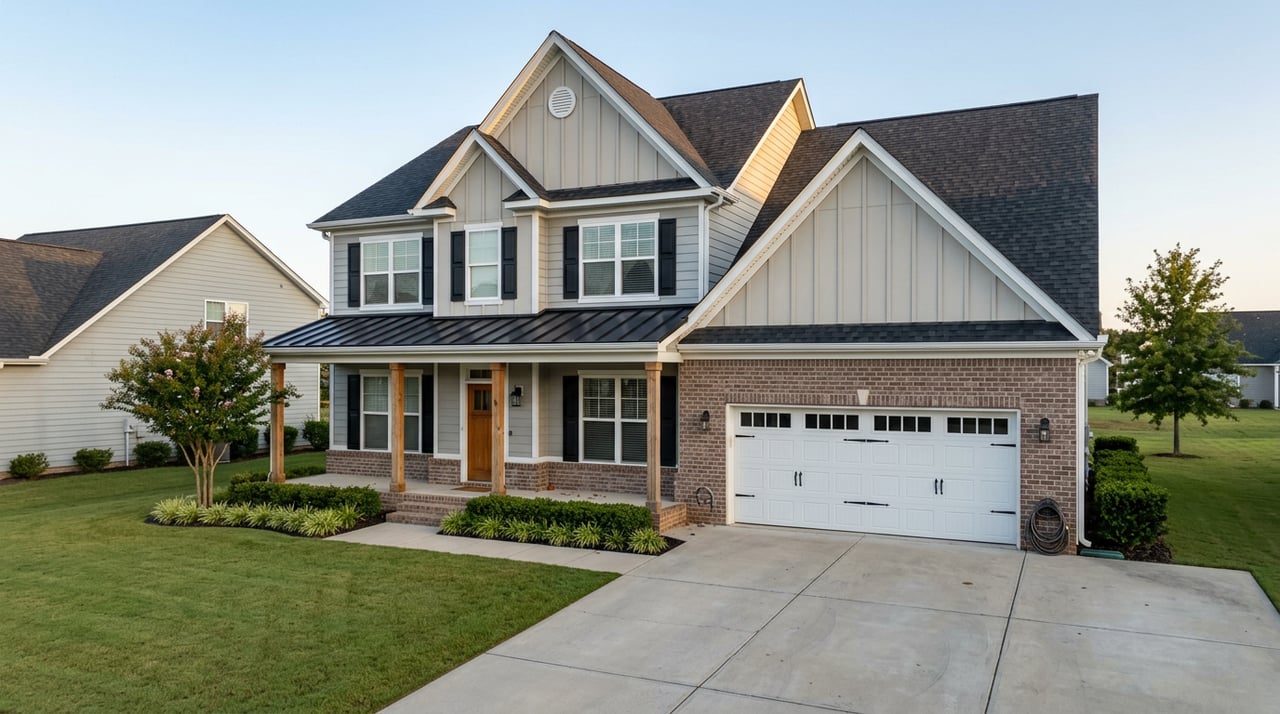
A Summerville homeowner named Matthew Keck ended up in front of Augusta's Historic Preservation Commission over siding that was already on his house. The vinyl had gone up at some point before he owned the property at 2204 Richmond Avenue, and the commission wanted it either justified or removed. Keck came back with quotes to replace it with fiber cement, the material the Summerville design guidelines actually call for. The number he reported to the board: $53,000.
That case sat on a routine commission agenda next to a request to fix a garage roofline and another to approve a rear addition. The Historic Preservation Commission was carrying out its review process in Summerville, where covered exterior projects on historic properties are subject to review. For covered exterior work on a historic property, the decision is not private in Summerville the way it is almost everywhere else in the Augusta market. It is reviewed under the design guidelines, with qualifying minor projects eligible for staff approval and other matters going before the commission.
That single fact explains something that looks confusing on paper: why Summerville listings quote wildly different prices for what looks, on a map, like the same neighborhood.
Augusta's Historic Preservation Commission oversees three local districts: Summerville, Olde Town, and Downtown. Inside those boundaries, a Certificate of Appropriateness, or COA, is required for any material change to a property's exterior appearance. That covers new construction, additions, demolition, relocation, and rehabilitation work that changes how the house looks from outside.
Some things skip the process entirely. Electrical work never needs a COA. Plumbing is exempt too. HVAC only triggers review if you're relocating the unit or installing a new one somewhere it wasn't before, swapping a condenser back into the same spot is fine without one. Exterior changes covered by the design guidelines, such as a new roof, fence or driveway, are reviewed under guidelines built specifically for the Summerville and Bethlehem districts, based on the Secretary of the Interior's Standards for Historic Preservation Projects.
The commission meets monthly, and applications are due the Monday after the previous meeting, which in practice means filing roughly a month ahead of the hearing you want. Minor projects that clearly meet the guidelines can get signed off by staff without a full hearing. Anything with more judgment involved, a new home on an infill lot, an addition that changes a front facade, a material swap the guidelines don't already cover, goes in front of the full commission.
This isn't a once-in-a-decade hurdle that a buyer might get lucky and avoid. Augusta's Historic Preservation Commission agenda for a single month in 2026 included cases on Walton Way, Arsenal Avenue, Henry Street, and Johns Road, all in Summerville, all requiring a hearing before work could start. One was a new single-family home going up on a vacant lot. Two were additions to existing houses. Another was a straightforward home improvement that still needed a public vote.
A separate case on Kings Way shows how granular the review gets. A homeowner wanted to extend a driveway with brushed concrete, remove some front yard landscaping, and regrade the yard. The commission's staff review found the submitted site plan too vague to evaluate how the new driveway would tie into the existing one, and asked for more detail before signing off. A driveway extension, in Summerville, is a design review question.
At the larger end, a homeowner on Monte Sano Avenue brought forward a plan for a swimming pool, a covered outdoor living space, and a two-car garage on a house built in 1911. That kind of project can absolutely get approved. It also comes with setback measurements, material specifications, and a formal hearing, the same process that governed the driveway on Kings Way and the siding on Richmond Avenue.
None of this makes Summerville a difficult place to own a home. It makes it a place where the exterior work you're planning has a calendar and a design standard attached to it before your contractor ever picks up a hammer.
Ask three sources what a Summerville home costs and you'll get three different answers, and the gap between them is the story. One widely used neighborhood data service puts Summerville's median home value well above $400,000. Portal-style listing data pulled in June 2026 put the median list price closer to $300,000 with average sale prices near $350,000. A separate twelve-month rolling average landed lower still, near $327,500, and down from the year before.
These aren't errors. They're measuring different slices of the same district. Summerville's housing stock skews old, with a large share of homes built before 1940, and the neighborhood carries a vacancy rate well above the national norm. A vacancy rate that high usually reads as a warning sign. In a district where exterior work runs through a design review board before a house can be finished and reoccupied, it just as easily describes homes sitting mid-renovation, waiting on a hearing date or a contractor who works in fiber cement and standing-seam metal rather than vinyl and asphalt shingles.
Put simply, Summerville isn't one market. It's several markets wearing the same neighborhood name, split by how much COA-regulated exterior work a given house still owes. A home where a previous owner already handled the roof, siding, and windows to guideline standard closes near the higher end of that range. A home that looks similarly priced on paper but still needs a full exterior rehab carries a second, unlisted price tag, as the Richmond Avenue siding case illustrates.
Summerville earns its premium honestly. Monte Sano Avenue carries a real dining strip, with Becks, Arsenal Taproom + Kitchen, Sheehan's Irish Pub, and Relic within walking distance of the district's residential streets. The Partridge Inn anchors the neighborhood's Masters-season identity, the Augusta Country Club and Westover Memorial Park give it green space and a golf pedigree, and the Summerville Neighborhood Association keeps the district's character on display with its annual Tour of Homes. None of that is priced into a listing sheet, and none of it is the reason a fixer-upper in Summerville can quietly cost more than a comparable renovation ten minutes away in a neighborhood without a design review board.
The practical move, before an offer goes in, is to find out how much of the exterior a given house has already brought up to guideline standard, and how much is still ahead of you. That's a question you can ask before you write a renovation number into your budget, not one you want to discover from a commission agenda after closing. A house priced $30,000 below a similar one down the street may simply be pricing in the siding, roof, or fence work its owner never got around to filing for.
Multi-generational construction knowledge helps here in a very literal way: knowing what fiber cement costs installed, what a standing-seam metal roof runs compared to asphalt shingles, and how a commission hearing actually reads a site plan turns a listing price into a real number before you're under contract, not after.
Does painting my house require a COA? Repainting in a similar color generally does not trigger review. Changing exterior materials, like swapping siding types, does.
What about a fence? Fences fall under the design guidelines and typically require a COA, with specifications on materials and placement covered in the district's design manual.
Can staff approve small projects without a full commission hearing? Yes. Minor projects that clearly meet the published guidelines can be approved administratively by planning staff rather than waiting for the monthly meeting.
Do I need approval before I close on the house, or just before I start work? You can request guidance from the Historic Preservation Commission's staff before closing, and it's worth doing if a renovation budget is part of your offer math. The formal COA application itself is filed once you own the property and are ready to start the permitted work.
If you're weighing a Summerville property against newer construction in Columbia County or a different Augusta neighborhood, that renovation math is exactly the kind of thing worth running before you write an offer, not after. Candace Riddle works both sides of that comparison regularly and can help you assess a historic Summerville home's exterior work alongside its listing price. Book a consultation to walk through what a specific property actually needs before you commit to it.
This article is general information, not legal, tax or financial advice. Consult a qualified professional about your situation.
Stay up to date on the latest real estate trends.
Get assistance in determining current property value, crafting a competitive offer, writing and negotiating a contract, and much more. Contact Candace today so she can guide you through the buying and selling process.